ENDURrun Ultimate 2026
By Hildeberto Mendonca
Sunday, August 9, 2026
Some races are not about a single effort, but about stacking one effort on top of another, day after day, until the body and mind have nowhere left to hide. That's the promise of the ENDURrun, now in its 21st edition, a multi-stage race through the Region of Waterloo that challenges runners to cover 160km across 7 stages in 8 days. Unlike the Sport edition I ran in 2023, which totals 80km, the Ultimate edition doubles the distance, pushing closer to a week of racing 100 miles.
Saturday, Pre-race Meetup and Kit Pickup
The gathering traditionally happens at the race director’s house. It is optional, but the majority of runners attend this event to ask questions about the races, to pick up the kit, and to get to know each other.
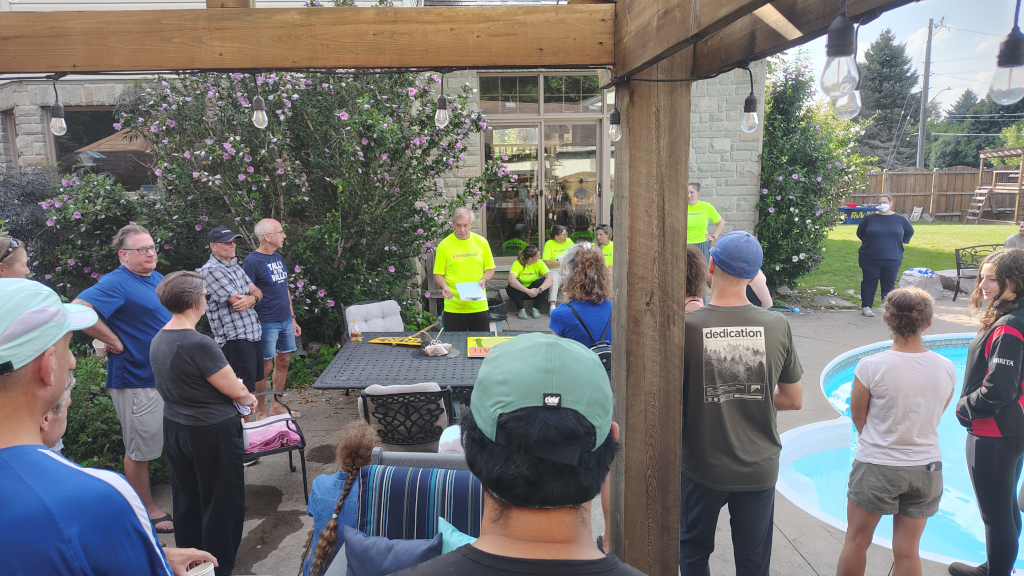
This year, Lloyd Schmidt reminded us about a few changes in the races and in the courses to accommodate the Sport and the Ultimate in the same event. He also mentioned the timing system, the availability of aid stations, and more than a thousand hours of volunteer work to make ENDURrun happen.
The weather forecast didn’t look ideal, with temperatures above 25 degres until Wednesday and a few chances of rain on Monday, Wednesday and Thursday. The only real risk was a thunderstorm expected for Monday. Friday, Saturday, and Sunday will be great, though.
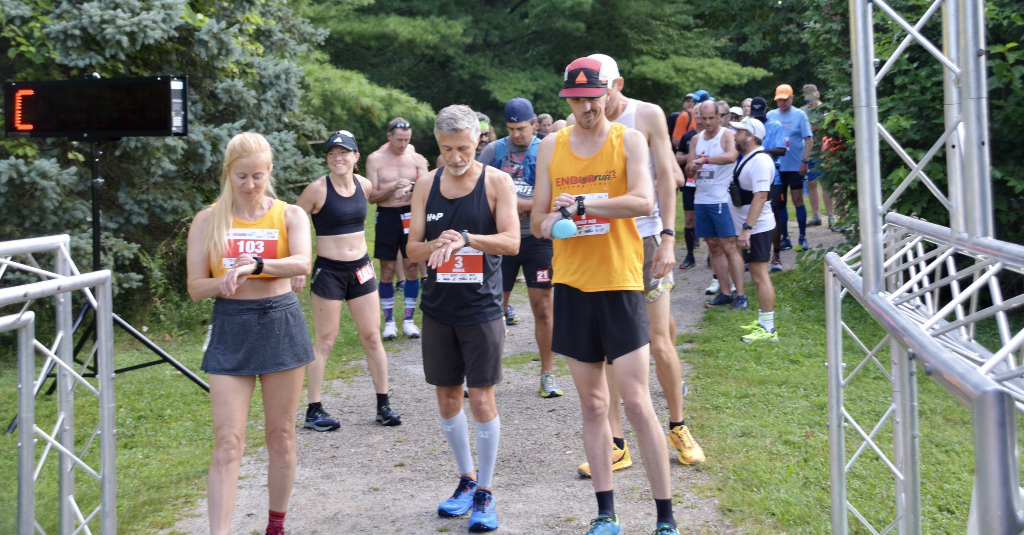
Stage 1: Sunday, Half Marathon at RIM Park, Waterloo
The running event opens with a road-like half-marathon on a bike trail at RIM Park, the same grounds that host the closing marathon a week later. It's a flat, fast opener, meant to get everyone racing before the terrain gets harder.
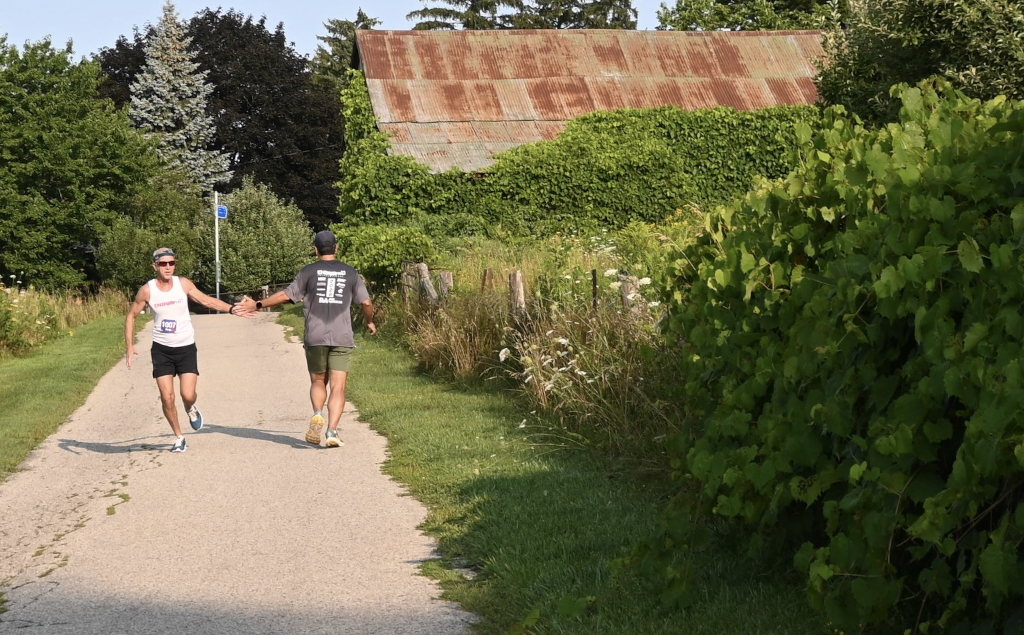
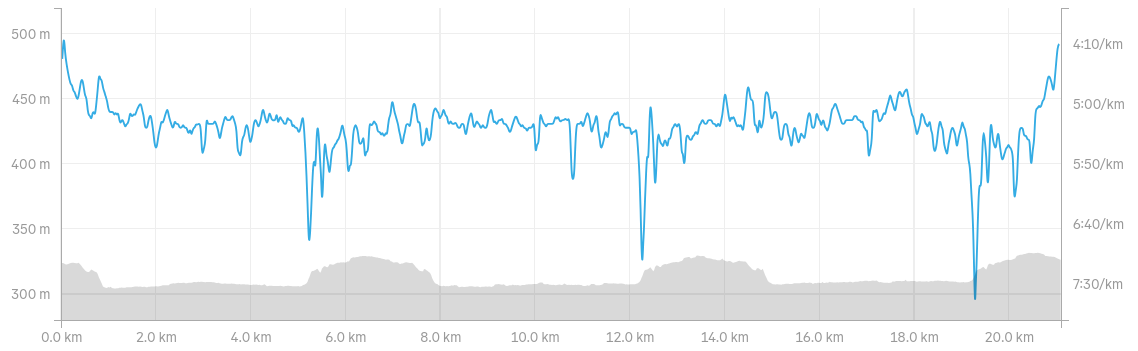
The day was a no-excuse day. The weather was perfect, the race impeccably marked and well served by water stations, and my training was good. So, I had no option but to do a course personal best. And I got it! 01:08 faster than 2 years ago, when I ran ENDURrun Ultimate for the first time. It was still 6 minutes slower than my fastest half-marathon. Why? Well, the course is not completely flat. Two muscle-eating hills sit at the end of the loop. Since we ran 3 laps, it made 6 hills in total. Every time I passed those hills, my pace slightly increased for the rest of the loop.
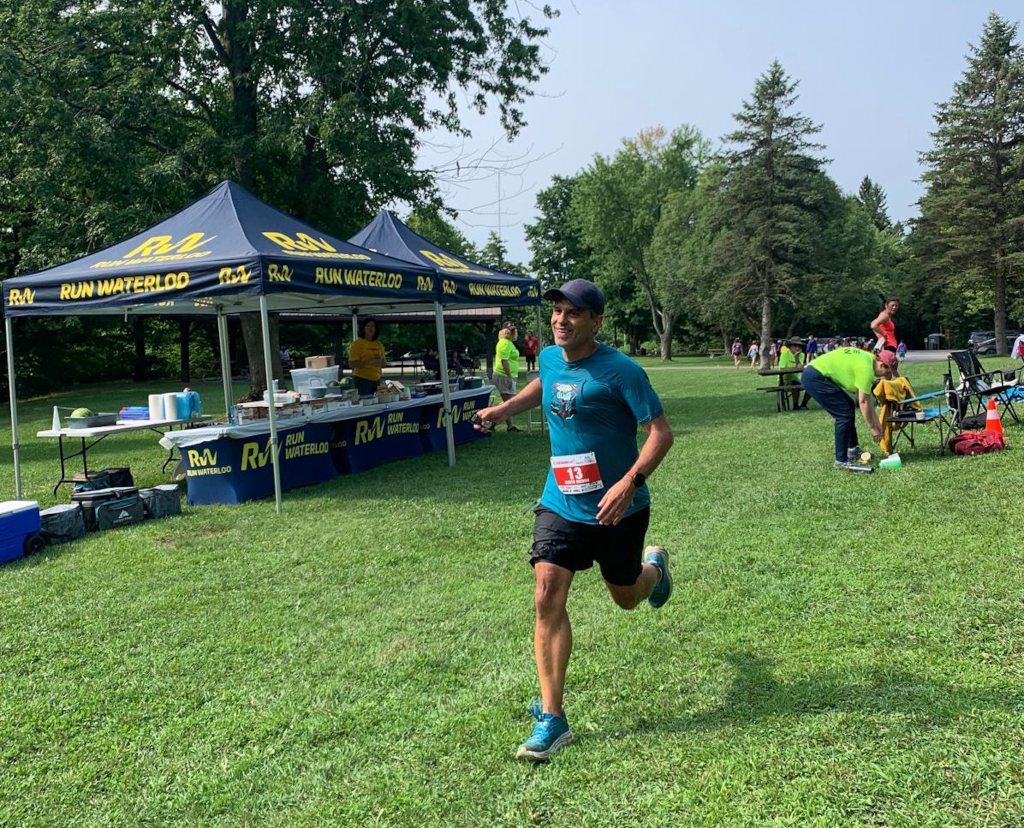
My son and daughter volunteered at water stations on the course. I knew my son was keeping an eye on me because he is beating me in shorter distances, but I'm still faster in any race longer than 10 miles. The result has shown that he still needs to train more.
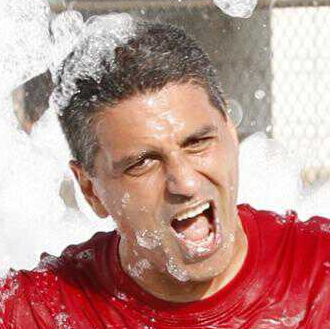
Reflecting after the race, I could have done a better job hydrating, taking more water instead of throwing it on my face to cool down. I would also take a gel instead of relying only on the carb load the day before. At some point, my legs were not responding well to my commands.
I completed the stage in 10th place overall, in a field of 18. I'm 05:18 behind the next runner and 04:50 ahead of the previous one. The gap to the next is likely to increase in stage 2, since it's a really flat and fast course and I'm a very long distance runner, not a fast one.
| Year | Position | Time | Avg Pace | Gap Up | Gap Down |
|---|---|---|---|---|---|
| 2026 | 10 | 1:52:33 | 5:20 | 05:19 | 04:53 |
| 2024 | 15 | 1:53:47 | 5:24 |
Stage 2: Monday, 15km Time Trial at Riverbluffs Park, Cambridge
The second stage is a 7.5km out-and-back done twice for a total of 15km. It’s a time trial along the Grand River Trail at Riverbluffs Park. Runners start one minute apart based on the previous day’s results, from the slowest to the fastest one, turning the stage into a rolling chase up and down the trail.
The course was straight, flat and fast, but it had a hilly section in the middle that needed to be managed carefully. I’m a downhill expert so I planned to take advantage of those descents. It had three water stations! That’s a lot for a 7.5km course. The race director is indeed generous with hydration and nutrition. From the runner's perspective, this stage has 3 roles:
-
The dog: Chase the next runner, who is behind in the overall time, to increase the time gap, gaining more room to push less later, if needed, without losing a position.
-
The rabbit: Be chased by a faster runner, who is a position ahead in the overall time, which mentally pushes the runner to be faster, at least managing the current time gap.
-
The prudent: Do you really want to push that fast in the second stage of the event, demanding too much of your muscles, which you will certainly need in tougher stages like Shades Mills and Baden? That’s another variable to consider.
I felt more like a rabbit than a dog, but not prudent at all. So, I decided to start fast to get a good 1-minute margin from the runner chasing me. I sustained an under 5min/km pace for the first 1 km, and then I slowed it down to a more sustainable pace, but still faster than yesterday. After passing the first water station, I could see my rabbit from a distance, and I thought it was a good idea to get closer to him so that he would be my pacer for a while. I managed to stay close behind during the first lap, until I noticed that my chaser was getting closer and closer. Oh my! I had to move! I caught my rabbit and changed my focus to escape from my chaser.
I took a gel in the hope that it would give me a boost by the time of the final stretch, and then I pushed hard. I didn’t want to look back to show my concerns, but I really hoped that I was going fast enough to increase the gap. It was time to put into practice my descent skills in the hilly section by sprinting madly downhill. It worked! I had a chance to check the gap after the turnaround point, and I was happy to see that I had at least a 30-second margin. So, if I repeat the strategy, I could double the gap by the end of the race. It worked again! I finished the stage with a 1:18 margin from my chaser, reducing the overall gap by 18 seconds. That’s not much, but it was better than I imagined.
Only the next stage will tell me whether it would be better to be prudent this time, but taking risks is also part of the whole learning process.
| Year | Position | Time | Avg Pace | Gap Up | Gap Down |
|---|---|---|---|---|---|
| 2026 | 9 | 1:17:39 | 5:11 | 05:01 | 06:24 |
| 2024 | 15 | 1:19:44 | 5:19 |
Stage 3: Tuesday, 30km at Shade's Mills Conservation Area, Cambridge
I twisted my ankle. Twice. The month before ENDURrun, I ran two 50-mile races, one with a technical level 5 out of 5 in approximately 17 hours, and another one 12 hours in the dark, where I could only see what my headlamp was pointing at. On those occasions, I didn't twist my ankle even once. But ENDURrun is different. Switching from road to trail the next day, without switching the mindset, is a recipe for disaster. Trails require focus on the path ahead, stay in the moment, clear your mind. A little distraction, which is very common in road running, and your relaxed legs will uncover a root or a rock under the leaves and unbalance your center of gravity, showing how disconnected from nature you are at that moment.
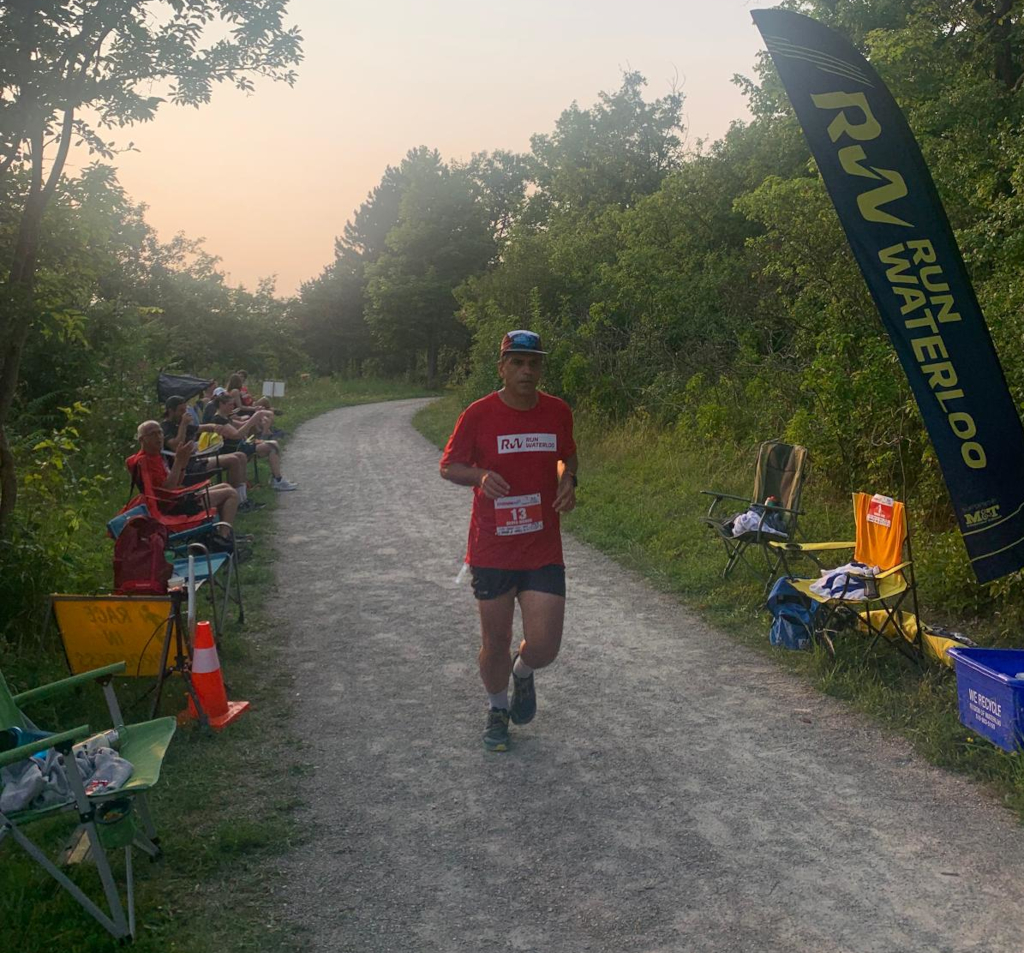
That's Stage 3, my friends! Runners move onto cross-country loops at Shade's Mills Conservation Area, covering 30km, the longest trail stage of the week and one of the toughest tests of accumulated fatigue. To add to the challenge, a tree was threatening to fall on the course, forcing a last-minute reroute, which added an extra long hill to the already hilly course.
With another impeccable day of weather, the race started on schedule, and this time I was more prudent, using the first lap to warm up, and gradually increasing the pace as the race progressed. The field moved faster though, which I considered a risky move. I planned to alternate electrolytes and gels per lap. When I was taking my first gel, I twisted my ankle, which made me limp for a few meters. That was a warning. "You know what?!" - I thought. "I'm not going to look at my watch anymore! I'm not worried about my pace or my position in the race anymore. I will just run on feel, whatever it means." And then I did what I knew well: run the flats, power-hike the hills, and fly down the descents. By experience I knew that for every uphill there is a downhill, so there was no reason to burn energy going up, when I could compensate on the way down.
It took me 2 laps to notice the result of my mindset change. When the curves of the trail took some time to rest, I could see runners on the horizon, calmly approaching. I initially thought I was lapping unhurried runners, but their silhouettes resembled more like the fast runners in the field. "Yes, they are the fast ones!"
That's when racing thoughts came back to my mind, which led to distraction, which led to a second twisted ankle. "F**k!" said a tree nearby that witnessed the scene. "Calm down! Your nutrition is good, your hydration is good. Just keep doing what you are doing," I said to myself. Sure enough, I got closer at every downhill until a point where I had to slow down to avoid bumping into them. That was the middle of lap 5, and by the end of that lap I was already in 6th place, passing 4 fast runners. From there, I just kept increasing the gap until the finish line.
The race finished, I cooled down, and the twisted ankle ended up not being serious at all. It hasn't even swollen, just a little pain to remind me of all these events. My quads were sore though. Maybe I pushed too much the stage before, but I certainly wouldn't leave those trails without pain anyway.
I got 6th place in the stage, and gained 1 position (9th) in the overall ranking, changing who I'm chasing and who is chasing me.
| Year | Position | Time | Avg Pace | Gap Up | Gap Down |
|---|---|---|---|---|---|
| 2026 | 6 | 2:57:25 | 5:55 | 02:11 | 02:52 |
| 2024 | 15 | 3:16:20 | 6:33 |
Stage 4: Wednesday, 10 Miles at Walter Bean Trail, Kitchener
The fourth stage is a 10-mile hilly run on a 4km loop at the Walter Bean Trail, along the Grand River in Kitchener. The course is on a gravel trail, almost entirely hilly, with a short flat section close to the finish line. That certainly makes the heart rate constantly higher than normal.
There was a risk of thunderstorms, but the weather improved a lot, and the conditions were very good for running. Since stage 3 was 30 km long, the race director planned this stage to happen more than 24 hours later, before sunset, to give runners extra time to rest. I made the terrible decision to go for a swim with my daughter, who was recovering from a shoulder injury, hoping it would help my ankle heal faster. It turns out swimming burns a ton of calories by constantly moving the entire body, and also keeping the internal body temperature stable while submerged in slightly cold water. That's why we feel incredibly relaxed after a swim session, craving food and a nap. I also dehydrated a lot without noticing, since the surrounding water hides how much liquid is being lost through sweat.
Despite being an experienced swimmer, I ignored all that, only concerned about heeling my ankle. As a consequence, I was relaxed at the start line, despite my mouth being dry and feeling a bit hungry. The race started, and I completed the first lap relatively well, but the fatigue hit me hard as soon as I reached the hills in the second lap. For a moment I even questioned if I would be able to finish the race, feeling dizzy and weak. So, I switched to survival mode, focusing on the next water station, and then the next hill, to keep moving forward.
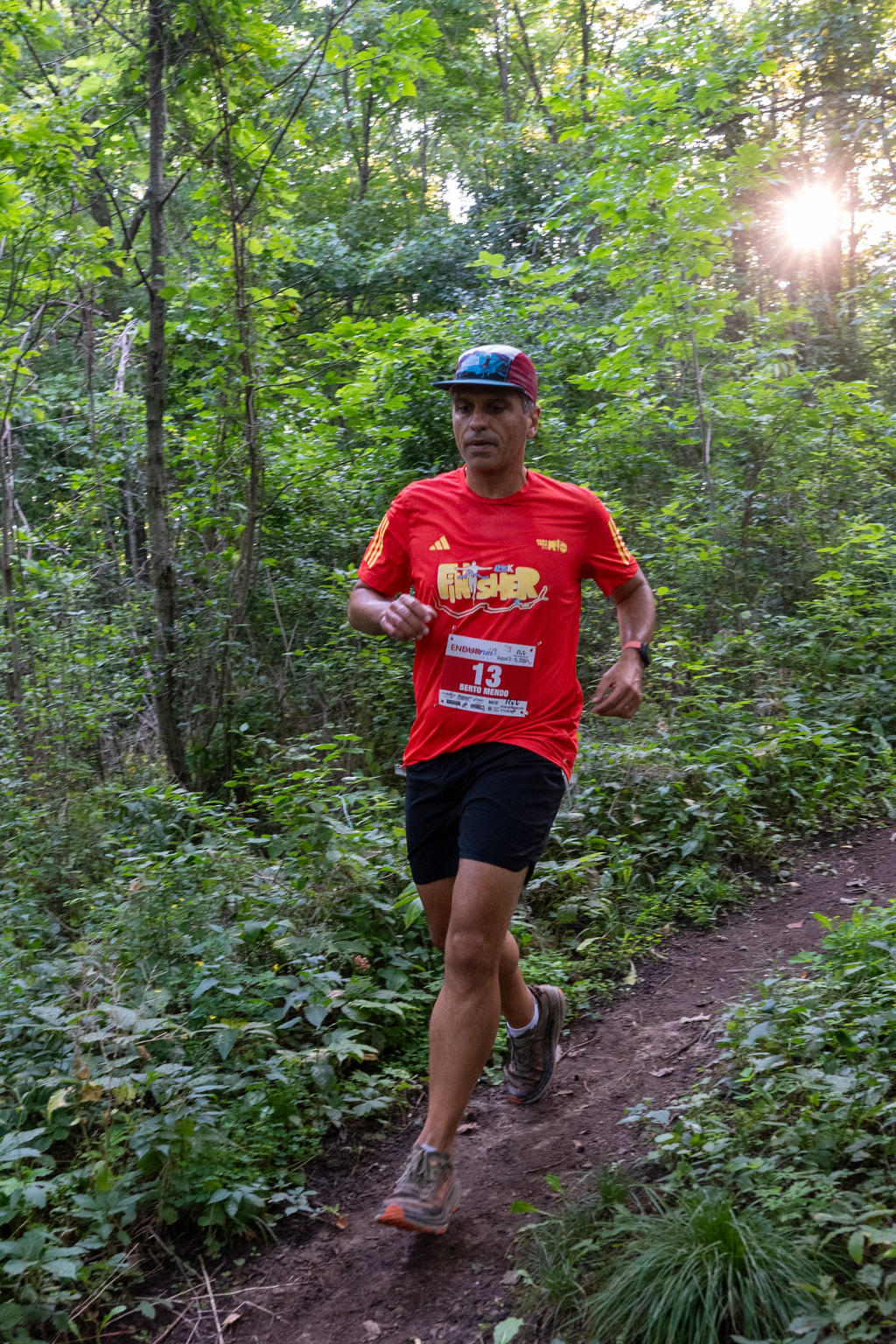
My cognition was equally fading. I couldn't reason out the root cause of what I was feeling. I nourished the simple idea that I pushed too hard the stage before, and the fear of making my ankle worse were the causes of my struggle. Then I took a gel, as planned, at the 10km mark, hoping it would help me to cross the finish line still standing, but what actually happened surprised me.
15 minutes later, starting the last lap, all the energy came back, and I was suddenly sprinting the downhills and running the uphills! I was flying again to a point that the next runner was more than 2 minutes ahead, and I managed to reduce the gap to a few seconds, almost catching him at the finish line. I realized that the problem was more metabolic than physical. Speeding the downhills also gave me confidence that my ankle was strong enough to hold the load throughout the rest of the competition.
Despite being my weakest stage, the biggest win was the lessons I learned. I got 12th place in the stage, and lost 1 position (10th) in the overall ranking, changing again who I'm chasing and who is chasing me. A full day of rest keeps us apart from the biggest challenge of all: Baden Hills!
| Year | Position | Time | Avg Pace | Gap Up | Gap Down |
|---|---|---|---|---|---|
| 2026 | 12 | 1:35:55 | 5:58 | 04:15 | 13:12 |
| 2024 | 16 | 1:36:28 | 6:00 |
Stage 5: Friday, 25.6km at Baden Hills, Wilmot
After the break, Stage 5 returns with 25.6km of technical trail loops at Baden Hills. It's the most technical terrain of the week, and with legs already carrying four stages of fatigue, it tends to separate the field.
With planned hydration and nutrition, and a full resting day, I was confident that my body and technical trail know-how would deliver the result I wanted. As a matter of fact, I got it! I finished in 6th place and made a personal best, 20 minutes faster than my first ENDURrun Ultimate in 2024. This is a +1000m elevation gain course, where each lap contributes 100m gain, compressed in only 2.5km. Even the elite were walking the hills.
The fact that I finished 10th in most previous stages demonstrates that at least 4 runners are consistently faster than me, but Shades Mill (stage 3) and Baden (stage 5) are different. They require know-how and specific training. It is important to know and practice how and when to conserve energy; how to land the feet on the downhills, how to stay balanced with the movements of the arms; the frequency of steps and the length of the strides according to the angle of descent; and when to switch from running to walking and back in an ascent. I've been building these skills for years, after the brutal experience of my first QMT50. It was a time when I was fast on roads and rarely ran on trails. Today is the contrary.
This stage was my last opportunity to gain some advantage over other competitors. The last two stages are flat and designed for fast runners. My only hope is to maintain my overall position, which is going to be tricky.
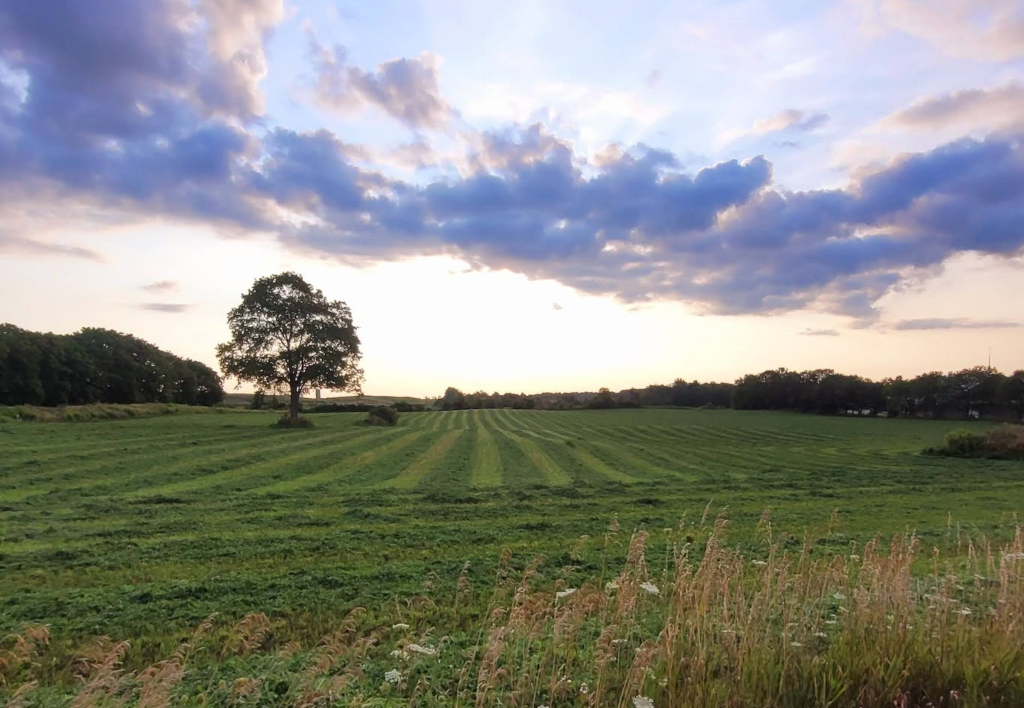
I close my trail with good memories and this spectacular view of the sunset from a farm, right beside the Baden Hills forest.
| Year | Position | Time | Avg Pace | Gap Up | Gap Down |
|---|---|---|---|---|---|
| 2026 | 6 | 2:56:41 | 6:54 | 06:39 | 03:24 |
| 2024 | 14 | 3:15:18 | 7:38 |
Stage 6: Saturday, 10km Track Time Trial at St. David Secondary School
Stage 6 shifts to the track at St. David Secondary School for a 10km, which translates into 25 laps. It's short and fast by comparison, but running hard on a track after five days of racing is its own kind of challenge.
ENDURrun makes you experience many running disciplines, including the ones you don't like. Some runners don't like technical trails. I don't like track. The idea of laping a loop of 400m dozens of times, in a completely artificial setup, made exclusively for racing, is against my running principles. It is boring, unrealistically flat, and its only focus is speed. Fortunately, it is the shortest stage. So, I can get over it and think about the next stage.
The race was split into two heats, based on the overall results up to that point. My 10th position put me in the first heat with the fast ones. I was the slowest one by a big margin because I conquered that position by running my specialty the day before (stage 5), not because I'm a fast road runner. So, when racing on track, that placement was not realistic at all. During the race, I was lapped two times by the next person in the ranking.
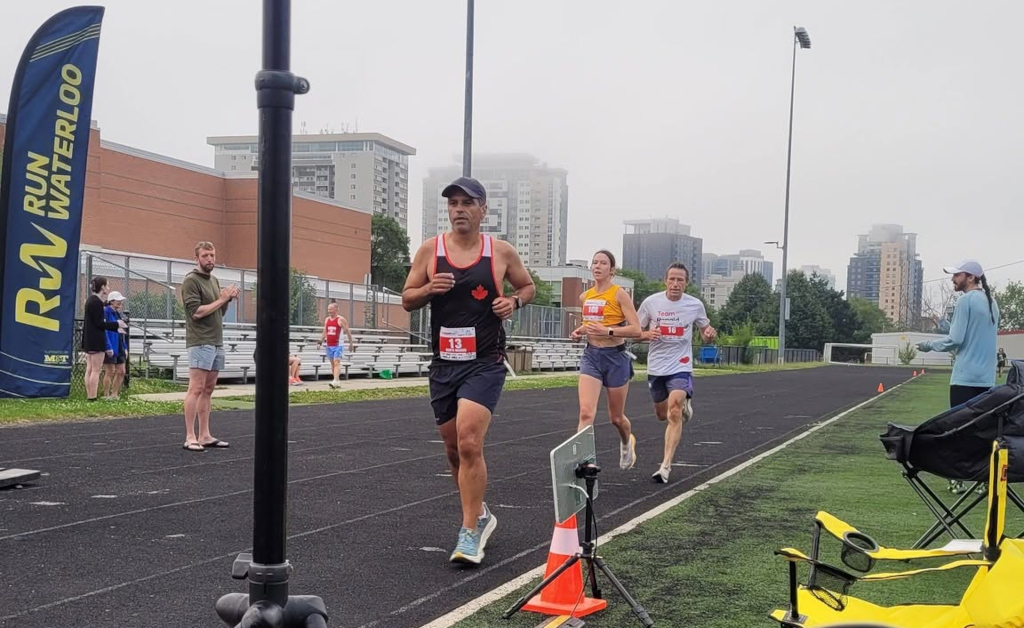
But something was not right. Even if I ran in the second heat, 3 other runners were faster than me. That's when I realized I was strangely slow. To put that into perspective, I ran the half-marathon in stage 1 with a pace of 5:20/km, and the 15k of stage 2 with a pace of 5:11/km. Even pushing hard, I couldn't do better than 5:28/km in this 10k.
I didn't want to admit, but the fatigue of the week was hitting me hard at that point. I insisted on believing that the marathon the next day would be different and I would be able to finish under 4 hours and 30 minutes. I just needed to eat, drink and rest as much as I could to have a good stage 7. That was about to become one of the best lessons learned in my running history.
| Year | Position | Time | Avg Pace | Gap Up | Gap Down |
|---|---|---|---|---|---|
| 2026 | 12 | 0:54:41 | 5:28 | 00:31 | 02:00 |
| 2024 | 14 | 0:51:12 | 5:07 |
Stage 7: Sunday, Marathon at RIM Park, Waterloo
The week closes with a full marathon back at RIM Park, on a Boston Qualifier-certified road course. After six stages and over 100km already in the legs, the final 42.2km is as much a mental test as a physical one. Runners lap 5 times in an 8.4 km loop.
It was not my intention, but this experience ended up turning into a dramatic plot. I felt a slight seismic wave on my body the stage before, but with the accumulated experience of running more than 20 marathons and 10 ultras, I was expecting the run to feel like a breeze. Instead, the shockwave caught me by surprise too soon in the course.
As in all the previous stages, the weather was excellent. 16°C with the sky covered by clouds. I was as relaxed as a runner going for a 10k. A sore muscle here and there was not concerning at all. I mounted my folding chair a few meters apart from the start, and arranged my gels and electrolytes in the sequence I wanted to take after each lap. I went to the washroom, hoping to leave some weight behind. Finally, I attached my bib to my T-shirt and the traditional RunWaterloo time chips on the sides of my waist.
5 min to 7 am, the call to gather at the start. The race director explained the course, the disposition of water stations, the rules, and wished good vibes to the runners. "10, 9, 8, 7, 6, 5, 4, 3, 2, 1, go!" At 7 am sharp, the runners went to the last and longer stage, to complete the 160 km, which feels so close and so far at the same time.
I didn't even warm up. Just moved slowly, going with a conservative pace to complete the first of 5 laps. I could still see my competitors a few meters ahead. I planned to slowly increase the pace and catch them later in the race. But on my way back to complete the lap, I felt my legs heavy, my mouth panting for air despite the low heart rate, struggling to climb the two short hills of the course. Something was not right.
My kids were volunteering at the last water station. They saw me approaching, but they didn't notice anything. My initial thought assessing the situation was "If I'm feeling like that before even covering 8km of the course, there is no chance I'm going to complete the marathon under the time limit." So, I took some water and told them that I was about to DNF. "What?! No! Daddy, you never give up!" said my daughter. My son walked with me, telling every inspirational quote he could remember, trying to dissuade me from that decision.
The race director was at the end of the loop. I walked towards him and said: "I don't think I'm gonna make the cut-off.", and he replied: "Keep going, man." If he had asked a question, I would have answered with a DNF. But it was a command. Ashamed to say anything else, I went to my chair, grabbed a gel and an electrolyte drink and kept going. "Let me enter problem-solving mode." I thought. "I feel weak, so let me take the gel immediately. Maybe I will feel better soon."
15 minutes later I was walking. I felt like hitting the wall around the 10k mark. With 32k more to go, I thought a DNF at the end of the second lap would be inevitable if nothing changed. When I reached my kids again, my daughter came to me and said: "Dad, you got 2 laps done! So that you know, we came up with a list of punishments in case you give up." That was the first and last laugh I gave that morning. My son ran with me with his motivation speech again. Those words persuaded me to try another lap.
The kids came up with the following punishments in case I DNFed. For a entire week, I couldn't:
- 1. work on my hobbies
- 2. eat ice-cream, popcorn or pizza
- 3. use my mechanical pencils, but use regular pencils instead
- 4. use my mechanical keyboards, but use a old plastic one with some broken keys
More gel, more water, nothing worked. The third lap was even worse. If I could, I would only walk, but it would take longer. So, I created a simple routine to keep going: 40 seconds running and 20 seconds walking. "..., 38, 39, 40, walk, 1, 2, 3, ..." I repeated the counting consistently. By this time, the runners I was competing with were doing great! Way ahead and looking good.
After finishing the 3rd lap, the idea of DNFing had faded. "I just need to complete two more laps." I thought. My wife was done with her race and saw me passing with my face down. She noticed my struggle and followed me on the course for a few meters. "Do you need something?" She asked, but I remained silent. I was feeling ashamed for going so slowly, so I finally said: "I'm worried about the cut-off." She assured me I had enough time and kept asking me questions that I couldn't reason anymore. "Please, leave me alone!", I said unkindly. She left me, and I immediately regretted what I said. However, I continued my 4th lap without looking back. "... 38, 39, 40, walk, 1, 2, 3, ..." and crying.
I was certain the next lap would be even worse. I kept going, physically and emotionally destroyed. By this time, all the other runners were doing their last lap, and I still had one more. Since I was self-sufficient, carrying my own hydration, I told the volunteers on the course to go before I was back. They had been working since 5:30 am and, waiting for me, would add a full hour to their shift. I didn't want to disrupt any plans. "..., 18, 19, 20, run, 1, 2, 3, ..."
Finished 4th lap. Starting the last one, I grabbed my gel, refilled my water bottle, even knowing that they were not helping. My wife asked me if she could accompany me in the final kilometres. "Yes, but please don't talk to me. I'm counting my rhythm, and it helps me to move forward. I don't want to lose count." We went together, but I broke the silence to say, "I'm sorry!"
I was expecting the course to be empty. I had everything I needed, and all the other runners had finished or were about to finish. When I saw the far-end water station was still up and running, I melted into tears. "They didn't have to wait for me." I thought, surprised. My wife looked at me, but she knew she couldn't do anything. This time my bottle was almost empty, and I was lucky they were there to refill my bottle. After that, every time I saw a volunteer, I burst into tears.
What can I say about my wife? One hour side-by-side, and she didn't say a single word. She is obviously talkative, but staying quiet showed how committed she is to me. Her silence also made me cry. "..., 18, 19, 20, run, 1, 2, 3, ..."
We saw our kids dutifully volunteering at the last water station, waiting for nobody but me (which also brought me to tears). We hugged, and then they left me alone to complete the last meters of the marathon. My concern was to clean my face so people wouldn't notice my swollen eyes, but it was in vain. The whole crew, slow to fast runners, their families, my family, all cheering for me, with big smiles, shouting, clapping. They hold the traditional ribbon for me to cross, as they do for all ENDURrun finishers, who undoubtedly gave everything they had to run 160 km that week. No more counting, just tears of gratitude and relief.
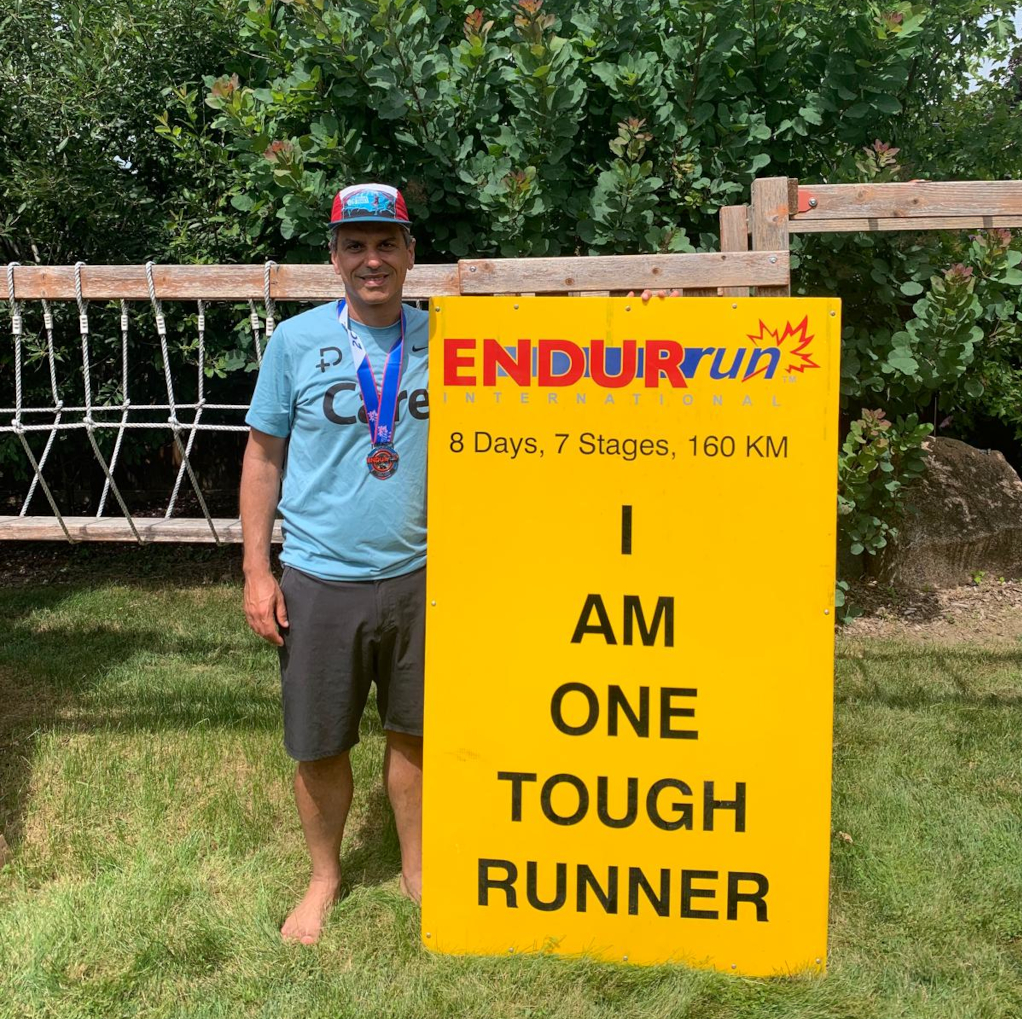
If anybody had told me to stop, I would have stopped, but encouragement at ENDURrun is overwhelming. I was a grain of negativity in an ocean of positivity. They believed in me more than I believed in myself. Thanks to them, I'm a two-time ENDURrun Ultimate finisher, a tough runner.
| Year | Position | Time | Avg Pace | Gap Up | Gap Down |
|---|---|---|---|---|---|
| 2026 | 19 | 5:13:05 | 7:25 | 1:09:07 | 0:57:04 |
| 2024 | 14 | 4:12:37 | 5:59 |
Viral Infection
Since I felt ill the next day, with a fever, cough, and sneezing, the doctor believes my weakness was the first symptom of a viral infection. He asked for some tests to make sure there is no other underlying condition.
Awards
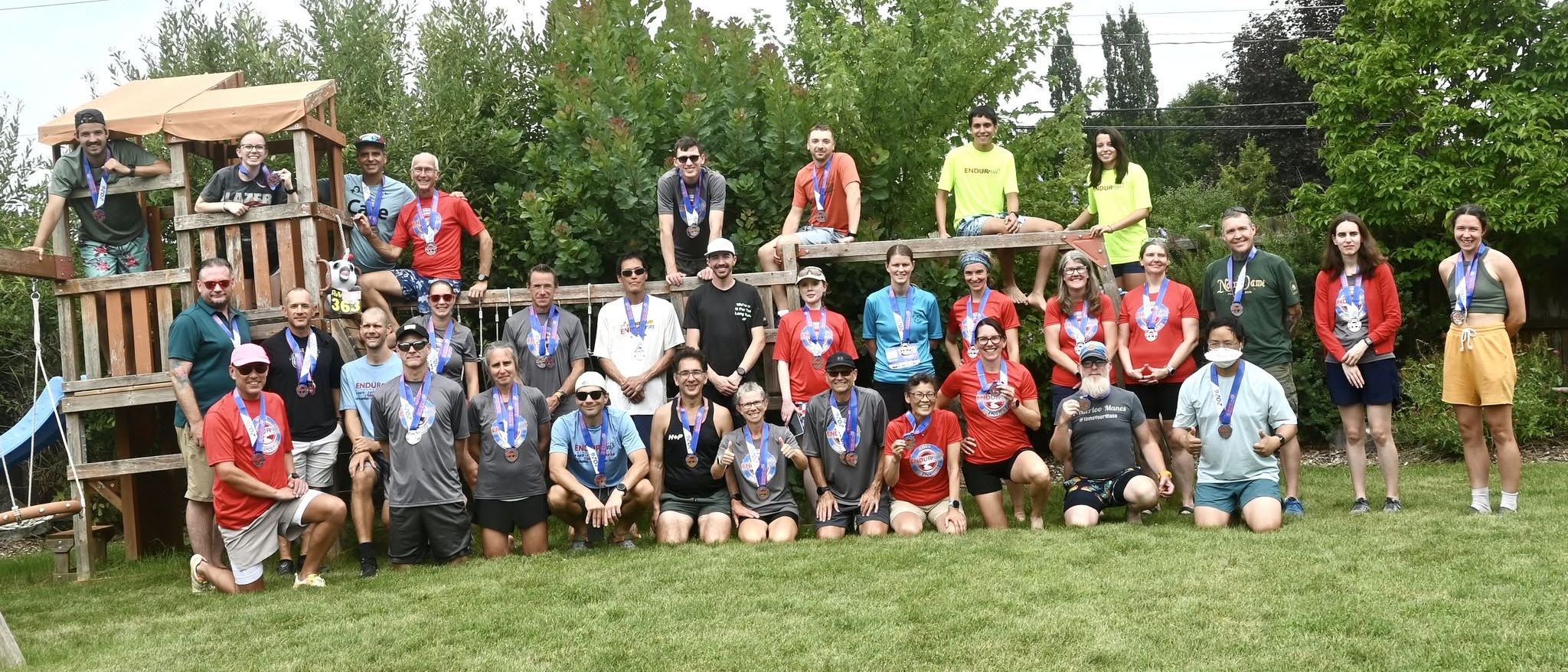
Thanks to me, the awards ceremony started a bit late. We gathered once again at the director's house to eat and drink, share our experiences, and get recognized for our achievement.
Tally in the Valley 12 Hours Night Race
My main goal with this race was to learn how I would feel and what the challenges are of running at night. I also wanted to complete at least 1 lap per hour and cover a total of 80km or more.
ReadThe Best Trails in the Waterloo Region
As a trail runner, I have a special relationship with the trails in our region. These is a compilation of the best trails I know.
ReadENDURrun Ultimate 2026
ENDURrun is a week-long staging race covering multiple venues, distances, altimetry, terrains, and weather conditions. Runners complete 7 stages to cover a total distance of 160km in 8 days. This unique format effectively improves your running fitness and makes you a better runner.
More Experiences
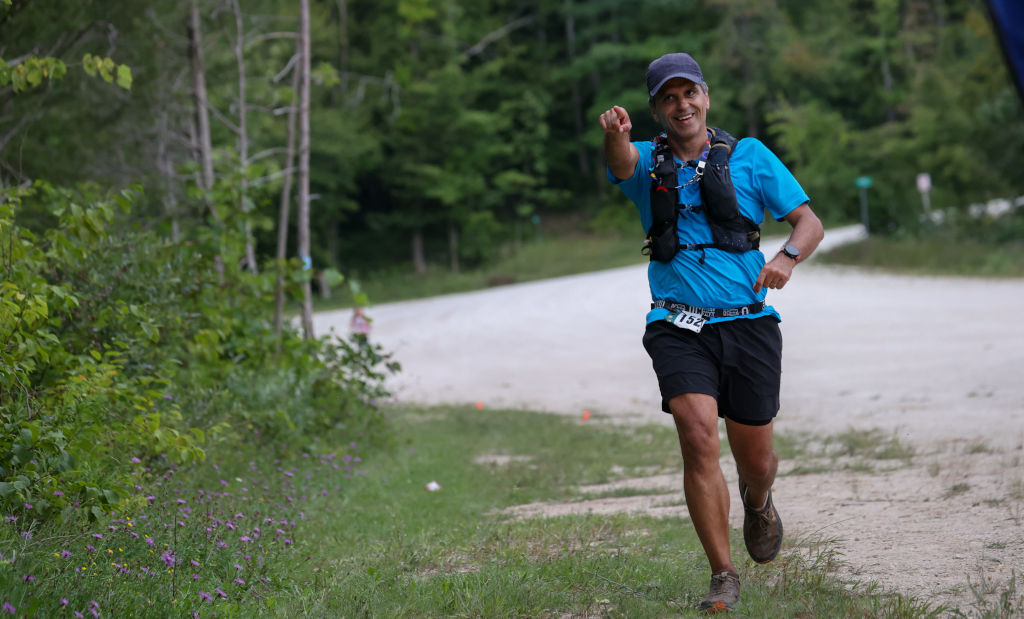
The Devil's Key Trail Race 2026
The Devil's Key landed exactly one week after finishing ENDURrun Ultimate 2026, and the days between were not the taper I needed — I spent most of them sick, still fighting off the viral infection that caught up with me during that race. By the morning of the start, at Devil's Glen Country Club in Duntroon, I'd already regretted signing up for The Devil's Key more than once. 66.6km on the Bruce Trail, my second time on this course, was waiting anyway.
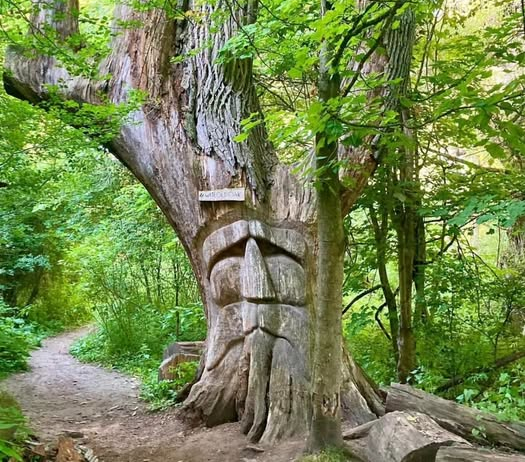
The Best Trails in the Waterloo Region
As a trail runner, I have a special relationship with the trails in our region. These is a compilation of the best trails I know.
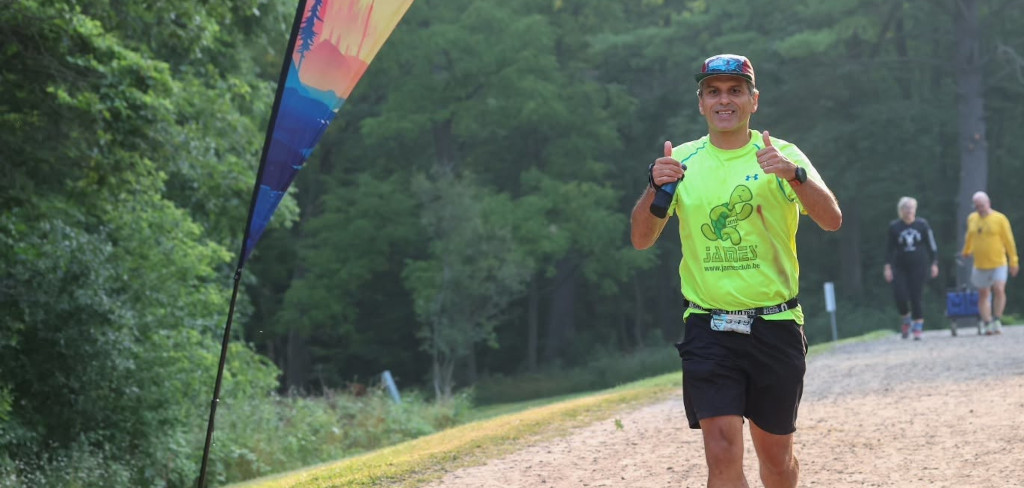
Tally in the Valley 12 Hours Night Race
My main goal with this race was to learn how I would feel and what the challenges are of running at night. I also wanted to complete at least 1 lap per hour and cover a total of 80km or more.
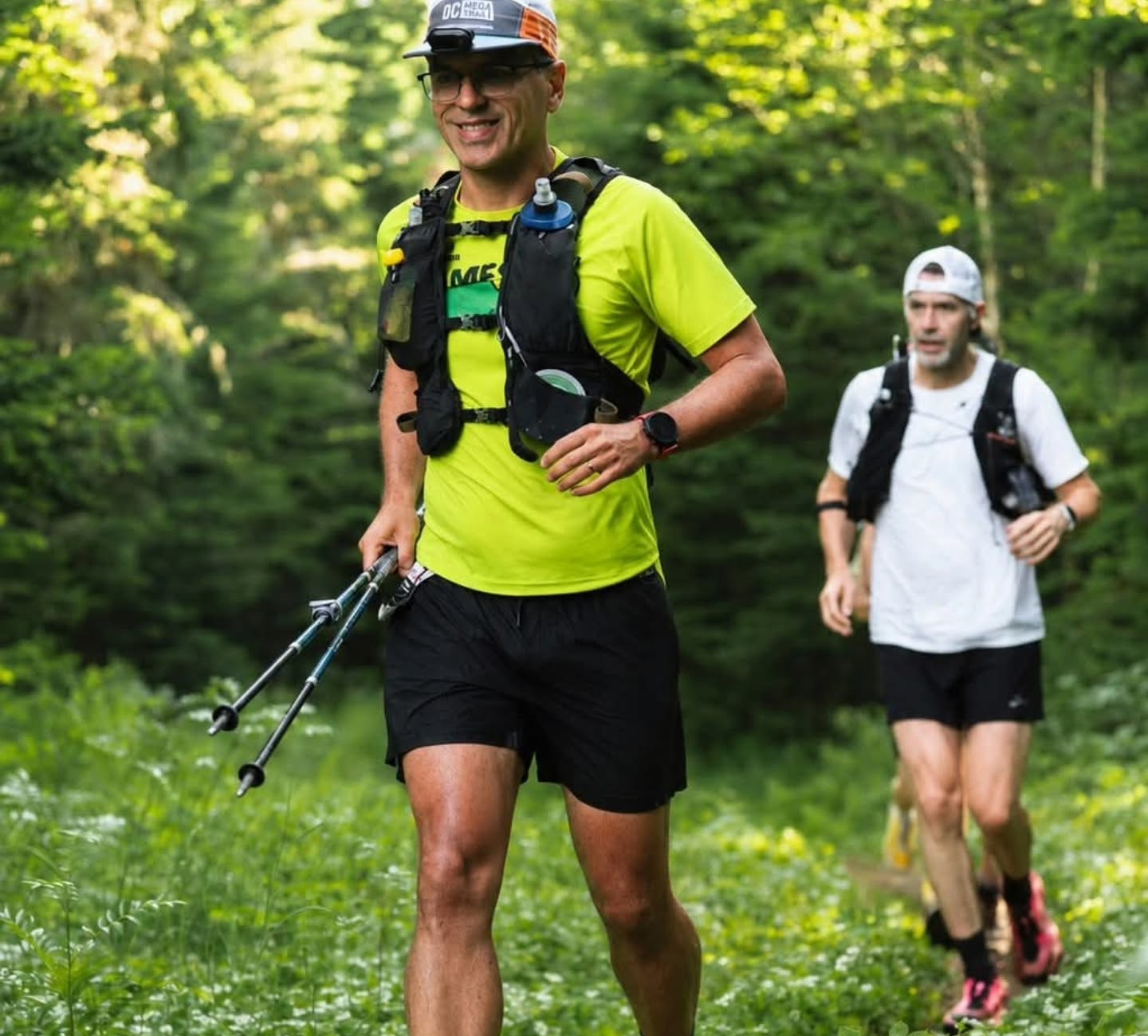
Quebec Mega Trail 80 2026
Just like the 50 km I did last year was not a normal 50 km distance we run elsewhere, the 80 km is not a regular one in QMT 80. It is tough. It requires planning, logistics and strategy. That's why I love QMT. It gives the mental preparation to face any other callenges. With proper physical training, nothing else can stop you.
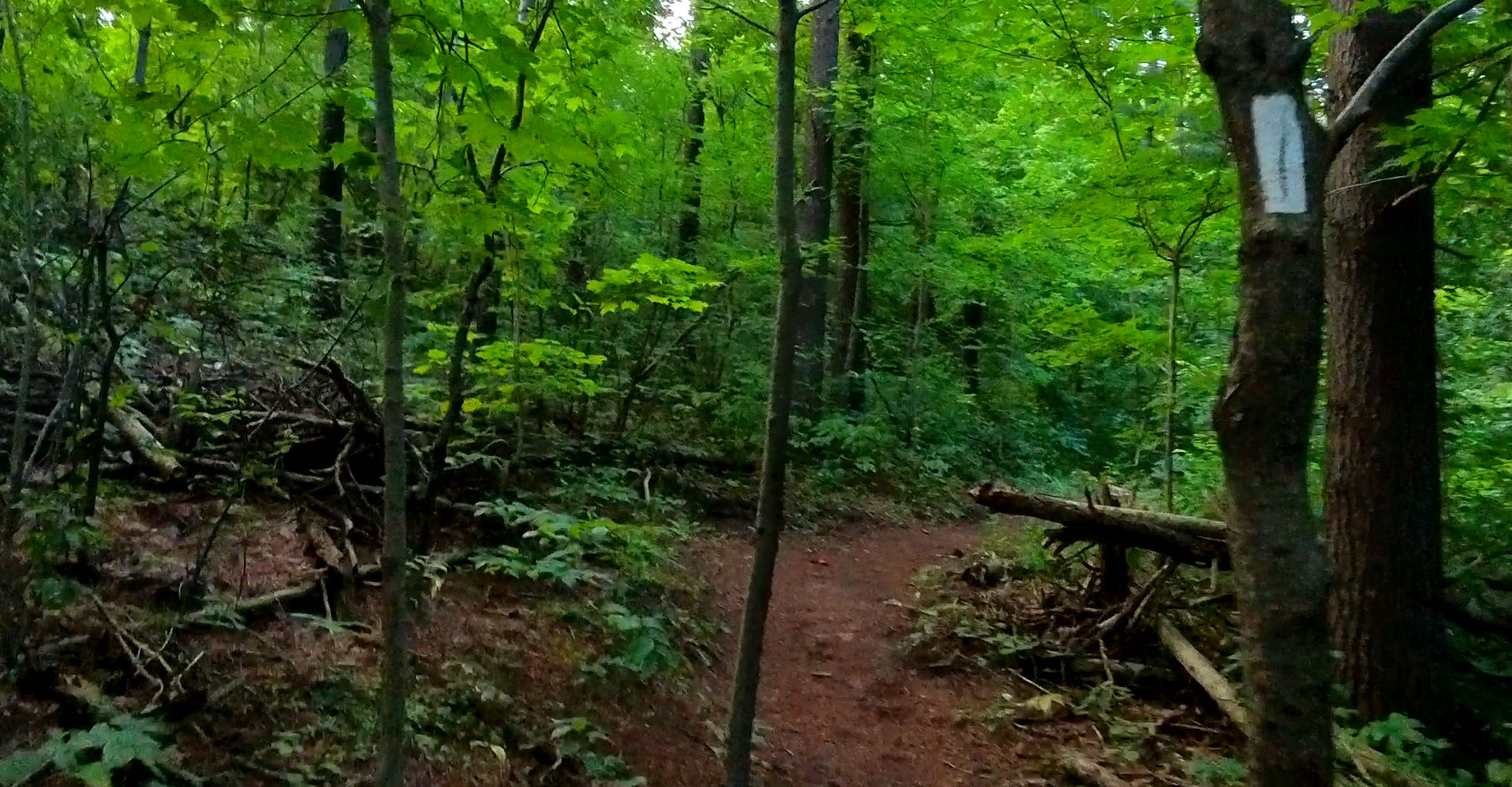
The Best Hills in Waterloo Region
These are the top 6 hills in Waterloo Region, where you can train for your next race, from cross-country to ultra-distances