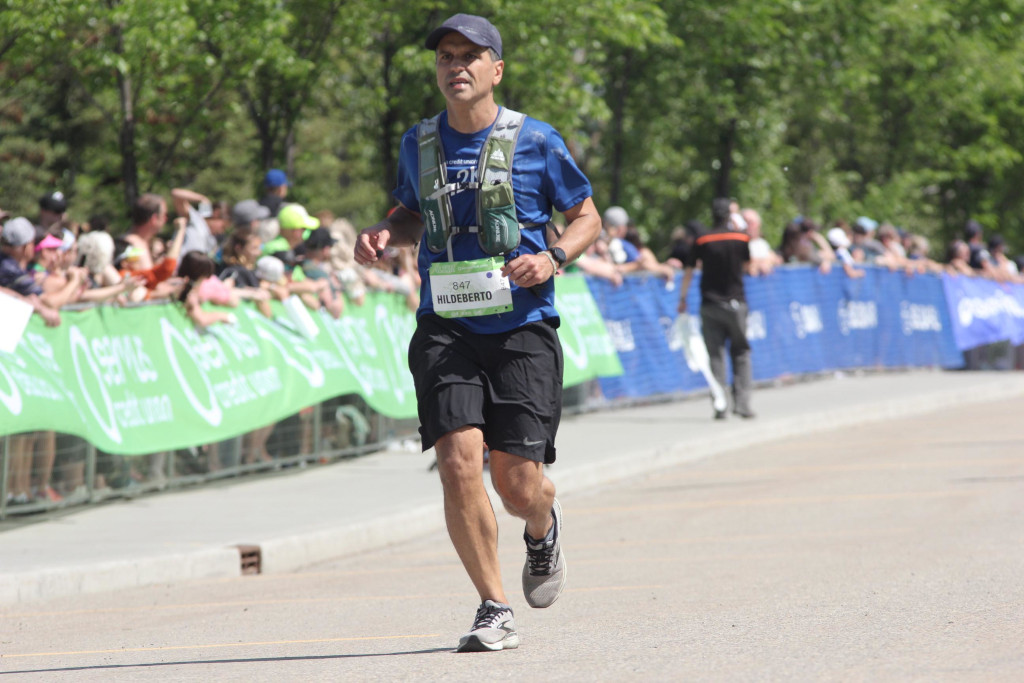
Calgary Marathon 2023
By Hildeberto Mendonca
Sunday, May 28, 2023
With a 200 m elevation gain and temperature above 20︒C, Calgary hosted a marathon as hard as Ottawa last year. I worked more on my acclimation to the warming weather this year, but it wasn't enough to contain my profuse sweating. At least I was 25 minutes faster than that fateful Ottawa race, showing gradual progress over time. On the other hand, compared to the marathon I ran less than a month ago, it was a shame. Should I put all the blame on me?
Calgary hosts a mid-size marathon event, with a field of 1200 marathoners. It was well organized, mostly scenic course throughout the suburbs, downtown, and along the Bow River. The public was supportive and welcoming. I had nothing to complain about, except for the pacer I decided to follow.
As I have reported in my previous post, the 4:05 pacer at the Toronto Marathon was so good that he played a key role in pacing me to my new personal best. My strategy was to start slow, following him from a distance for a while, slowly approach his pack and stick to them to the finish line. I tried to follow the same strategy again and realized too late in the course that I fell into a trap. Between me and the 4:05 pacer was the 4:10 pacer. He was too close, a few seconds, not 5 minutes apart. Looking at my watch, I noticed I was consistently running a 4h marathon pace (5:41/km), something I didn't plan to do. I just wanted a new PB and one second faster would suffice. That speed was strange for someone behind a 4:10h pacer. I thought something was wrong with my watch after passing through the buildings downtown, but it continued like that for a long while. The 4:10h pacer was supposed to run an average pace of 5:55/km and the 4:05h pacer, 5:48/km. At some point, they were both beyond reach.
In my naivety of trusting those pacers, I had no more fuel left to fully run the race. I had to walk. A marathon is a long race and running it without a strategy, a plan to face the hills, to eat, to hydrate, makes it just another long run. I was frustrated when I finally realized my strategy has failed because of a variable I couldn't control: the behavior of the pacer I decided to follow. Sometimes it works, sometimes not. I had to learn it through experience. During the next marathon, I will ignore the pacers and trust the math and physics embedded in my smartwatch.
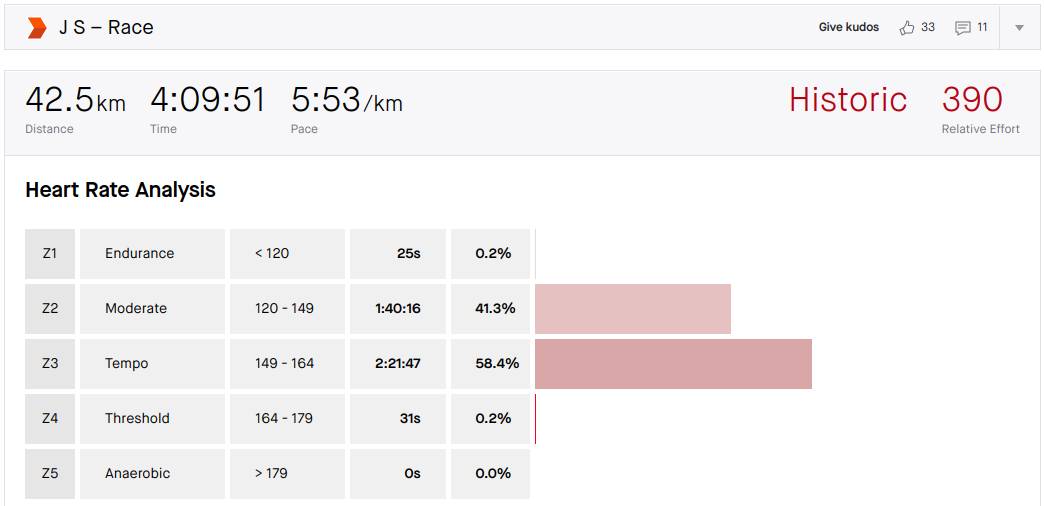
Out of curiosity, I browsed Strava and found the profile of the 4:10h pacer.
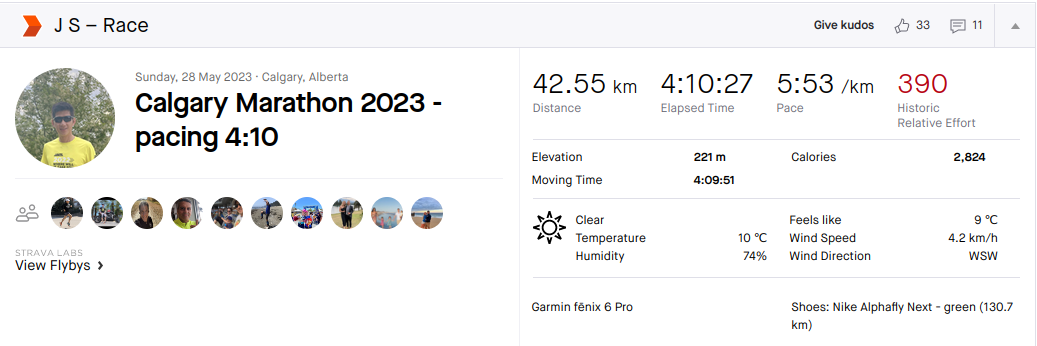
The data I've found was revealing. His average pace was 5:40/km for 35 km! If he continued like that, he would finish the marathon in 03:59:07h, but he slowed down in the last 7 km to make sure his finishing time was 4:10h.
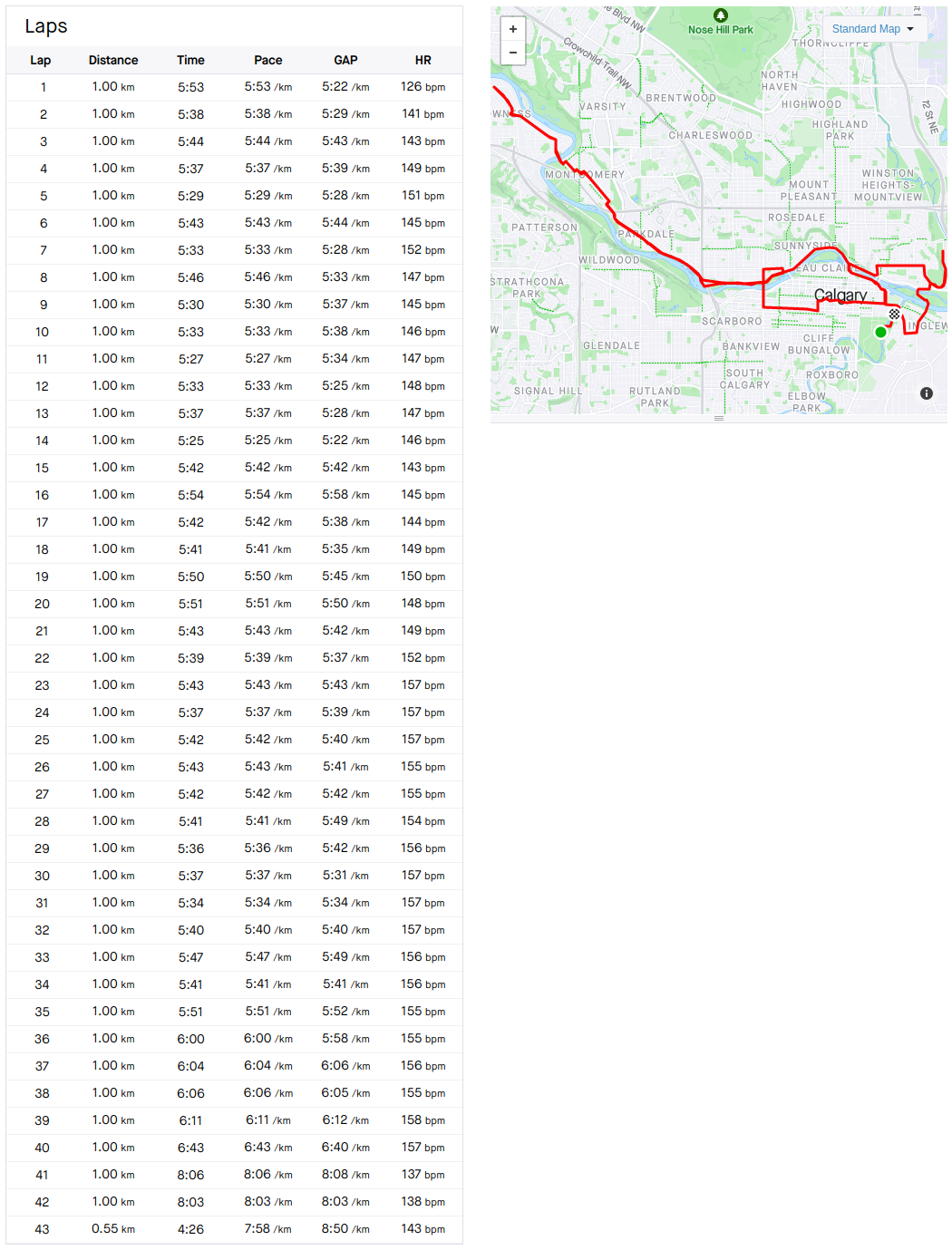
Is there a chance he has "hit the wall"? It is very unlikely for a runner with an average heart rate of 150 BPM (Beats Per Minute). The fact is, he was running mostly alone, trusted by nobody else but me, and deliberately adapted his pace to finish at the goal time.
I would like to emphasize that I do not blame the organization of the race for what has happened. I strongly recommend it to all road runners looking for a great experience. I will likely plan another vacation to Alberta around this time of the year to be able to run it again. Until then, I will certainly have time to get my strategy straight.
Number: 9
Time: 04:20:21
Best Marathon Time to Date: 04:05:19
Elevation: 200 m
More Experiences
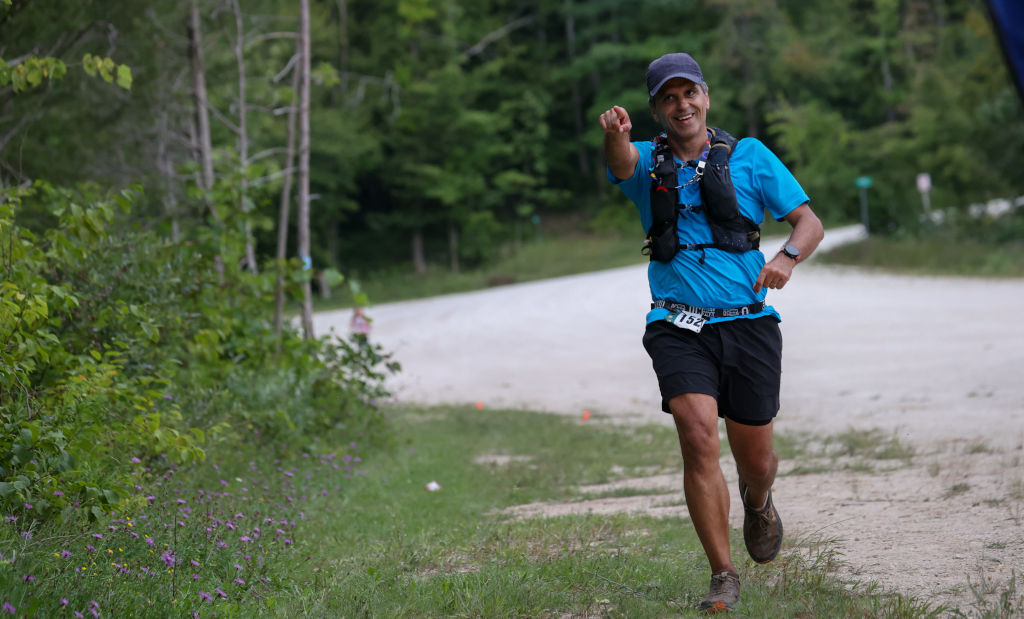
The Devil's Key Trail Race 2026
The Devil's Key landed exactly one week after finishing ENDURrun Ultimate 2026, and the days between were not the taper I needed — I spent most of them sick, still fighting off the viral infection that caught up with me during that race. By the morning of the start, at Devil's Glen Country Club in Duntroon, I'd already regretted signing up for The Devil's Key more than once. 66.6km on the Bruce Trail, my second time on this course, was waiting anyway.
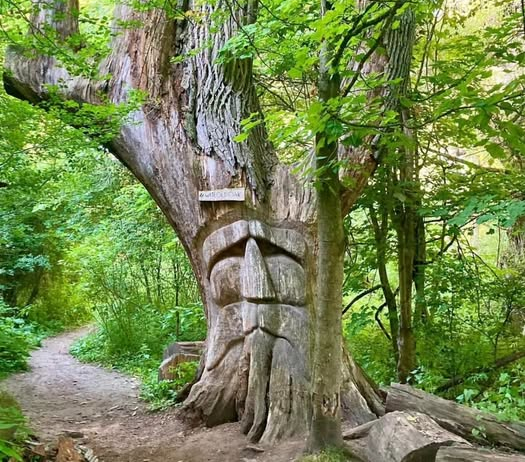
The Best Trails in the Waterloo Region
As a trail runner, I have a special relationship with the trails in our region. These is a compilation of the best trails I know.
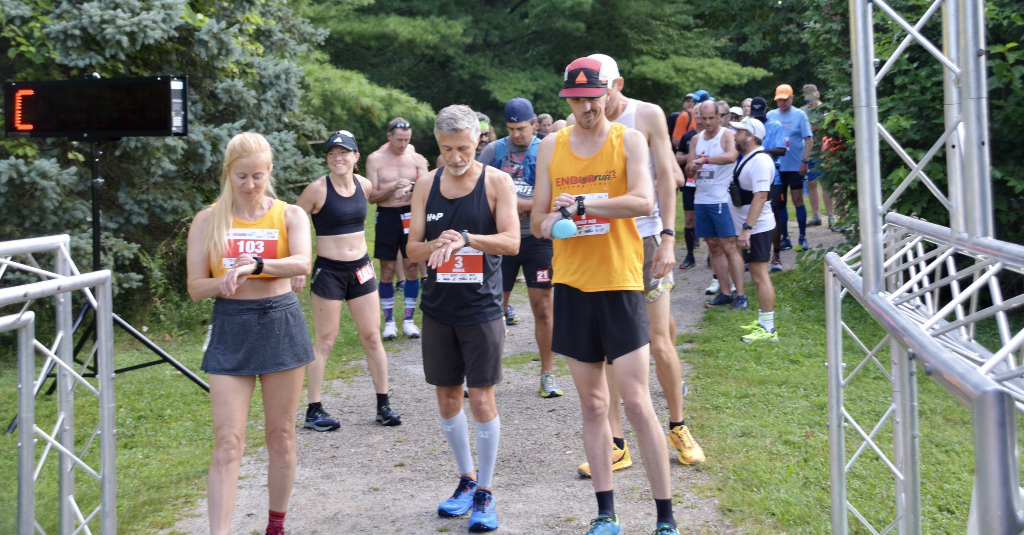
ENDURrun Ultimate 2026
Some races are not about a single effort, but about stacking one effort on top of another, day after day, until the body and mind have nowhere left to hide. That's the promise of the ENDURrun, now in its 21st edition, a multi-stage race through the Region of Waterloo that challenges runners to cover 160km across 7 stages in 8 days. Unlike the Sport edition I ran in 2023, which totals 80km, the Ultimate edition doubles the distance, pushing closer to a week of racing 100 miles.
Tally in the Valley 12 Hours Night Race
My main goal with this race was to learn how I would feel and what the challenges are of running at night. I also wanted to complete at least 1 lap per hour and cover a total of 80km or more.
Quebec Mega Trail 80 2026
Just like the 50 km I did last year was not a normal 50 km distance we run elsewhere, the 80 km is not a regular one in QMT 80. It is tough. It requires planning, logistics and strategy. That's why I love QMT. It gives the mental preparation to face any other callenges. With proper physical training, nothing else can stop you.